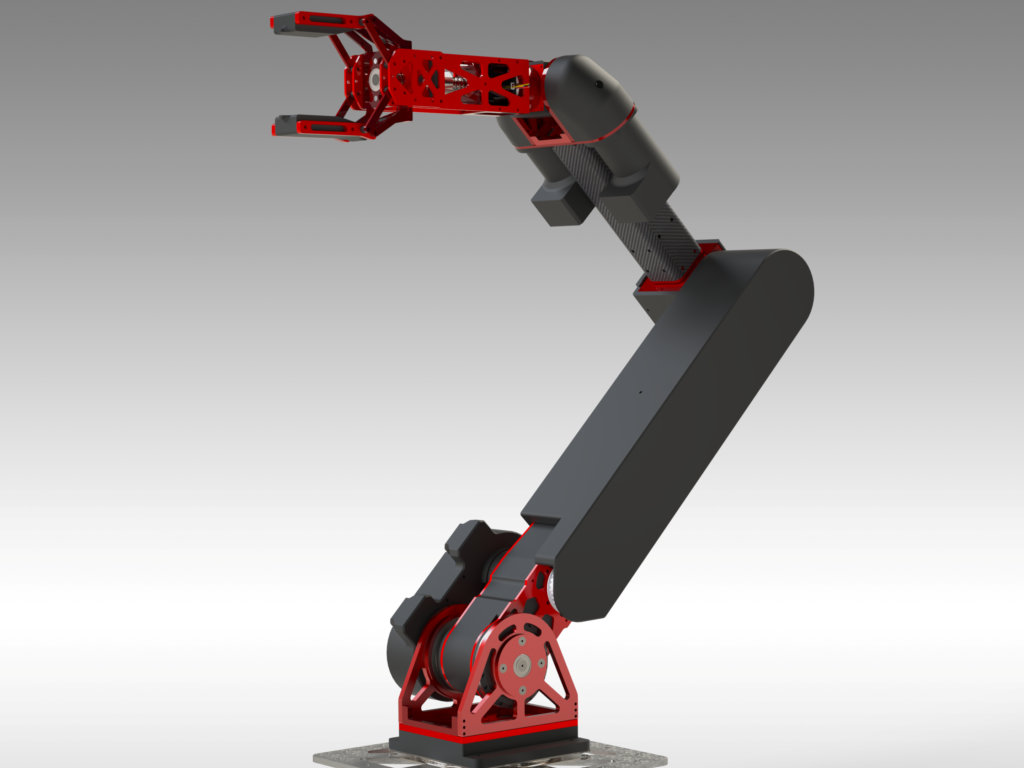
As Chief Engineer for the Harvard Undergraduate Robotics Club, I designed a 6 degrees of freedom robotic arm as an upgrade to my previously designed 5-DOF arm. In designing this arm I improved many aspects of the arm from my previous design as well as including a few novel features that allows this arm to be relatively lightweight, carry a payload of over 5 kilograms, and have a much higher range of motion. All parts for this arm were machined by either myself or a member of the team following my engineering drawings using a waterjet cutter and both manual and CNC mills and lathes.
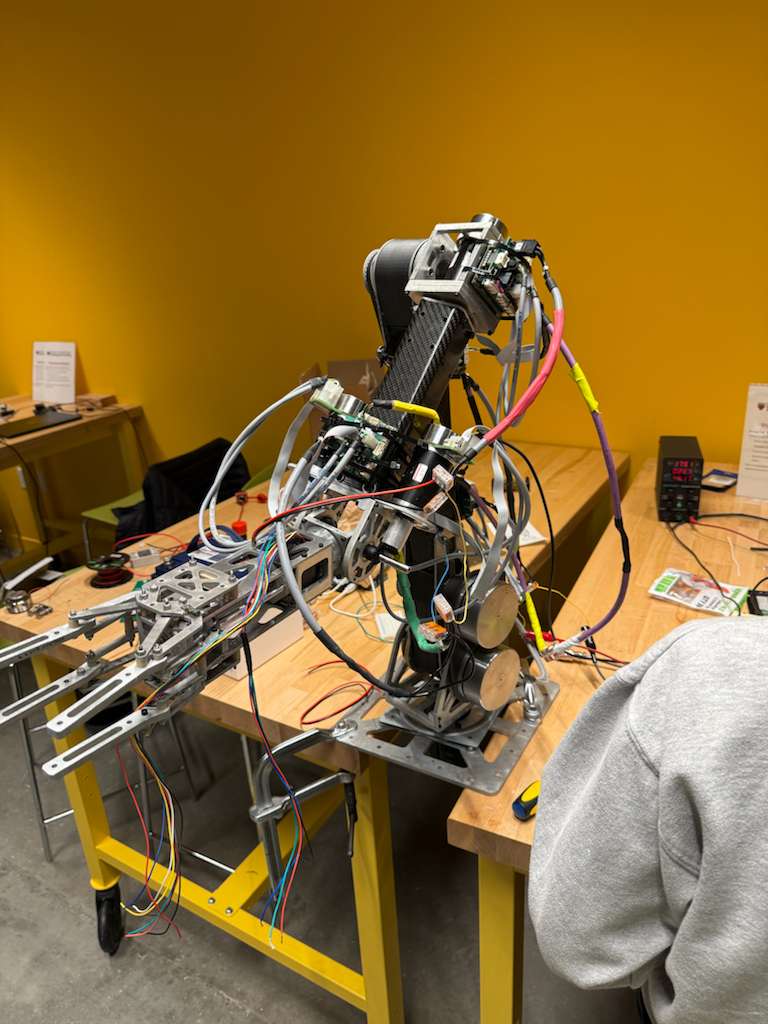
The gripper is a 4-bar linkage jaw driven by a ball screw linear actuator using a complex linkage system. This system allows for high gripping torque as well as high positional accuracy given the stepper motor driving the ball screw.
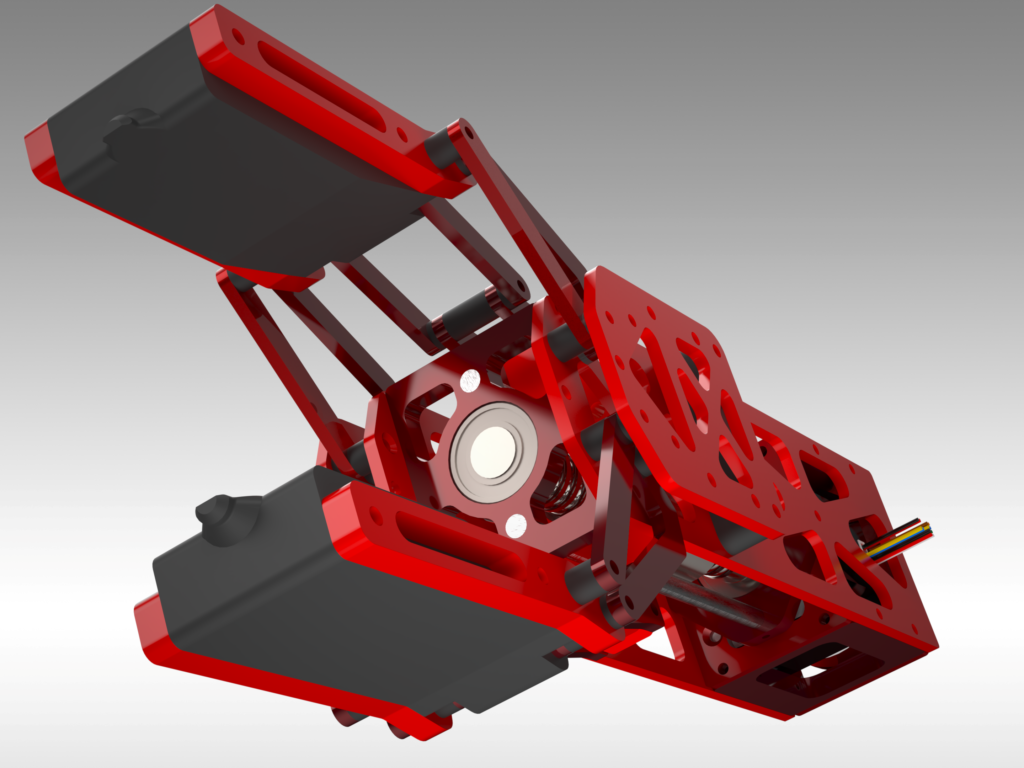
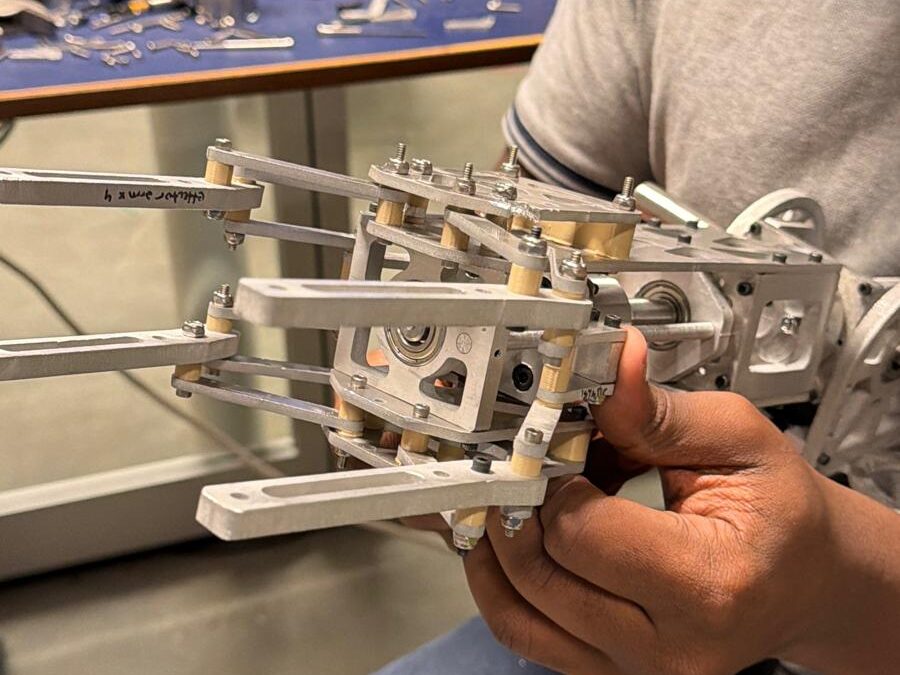
The “Forearm” has 3 degrees of freedom enabled by a brushless motor positioned near the elbow as “Wrist 1,” and a differential system as “Wrist 2 & 3” allowing the latter 2 motors driving the wrists to be positioned below the joint, decreasing the torque required to move the entire system.
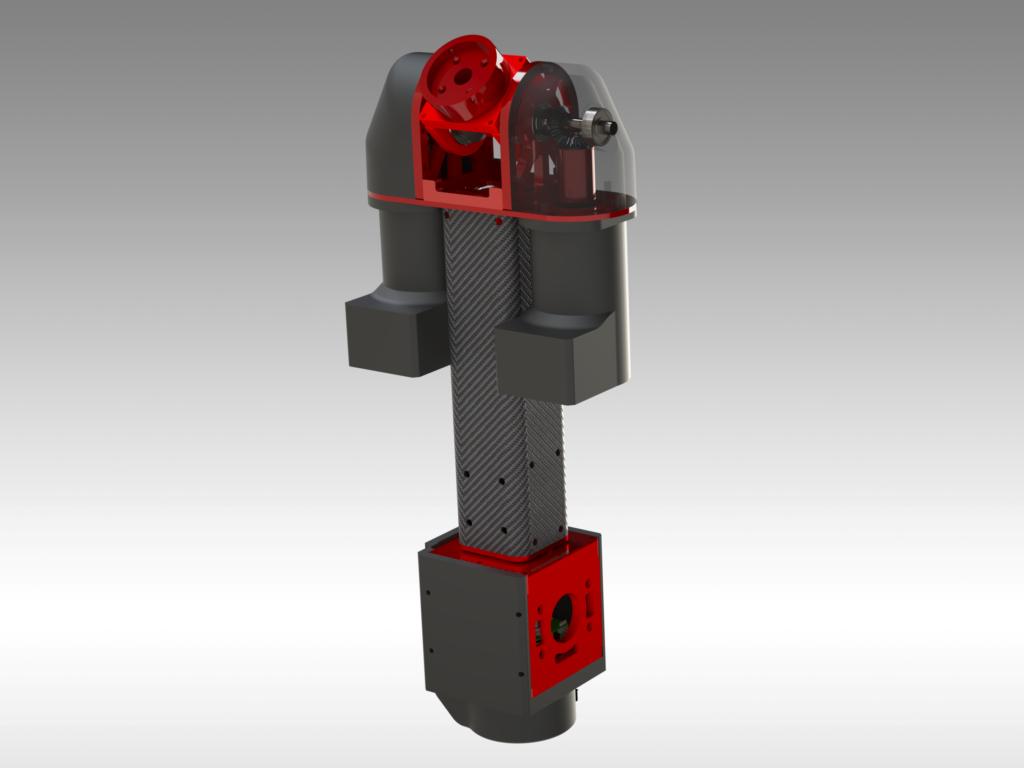
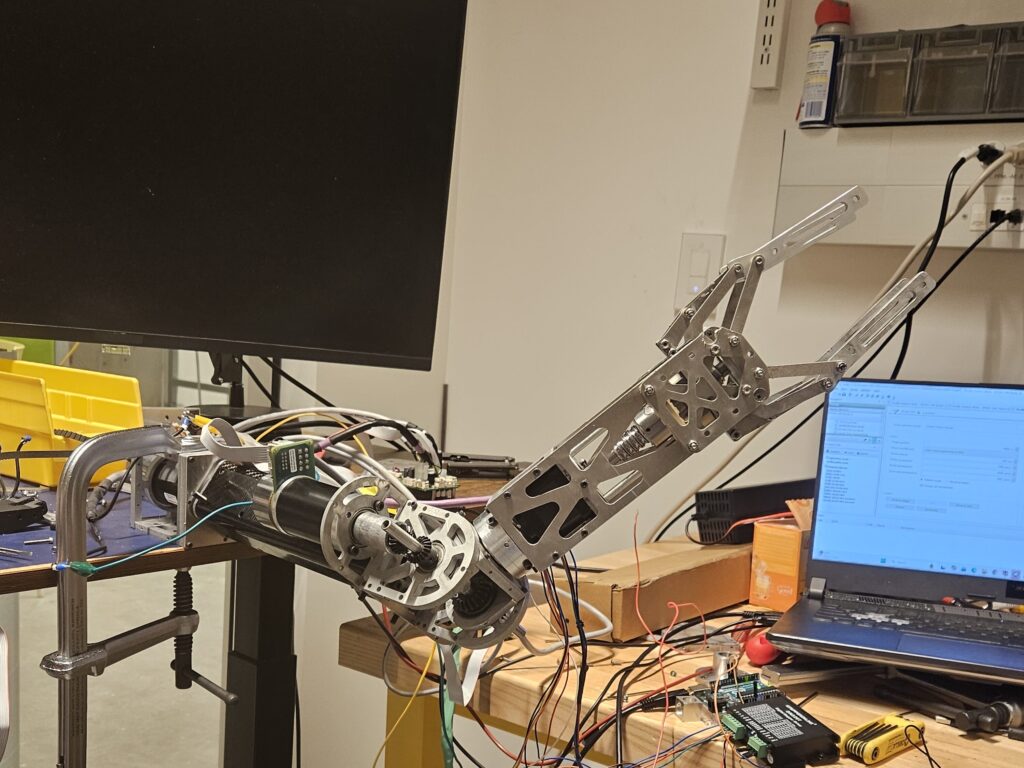
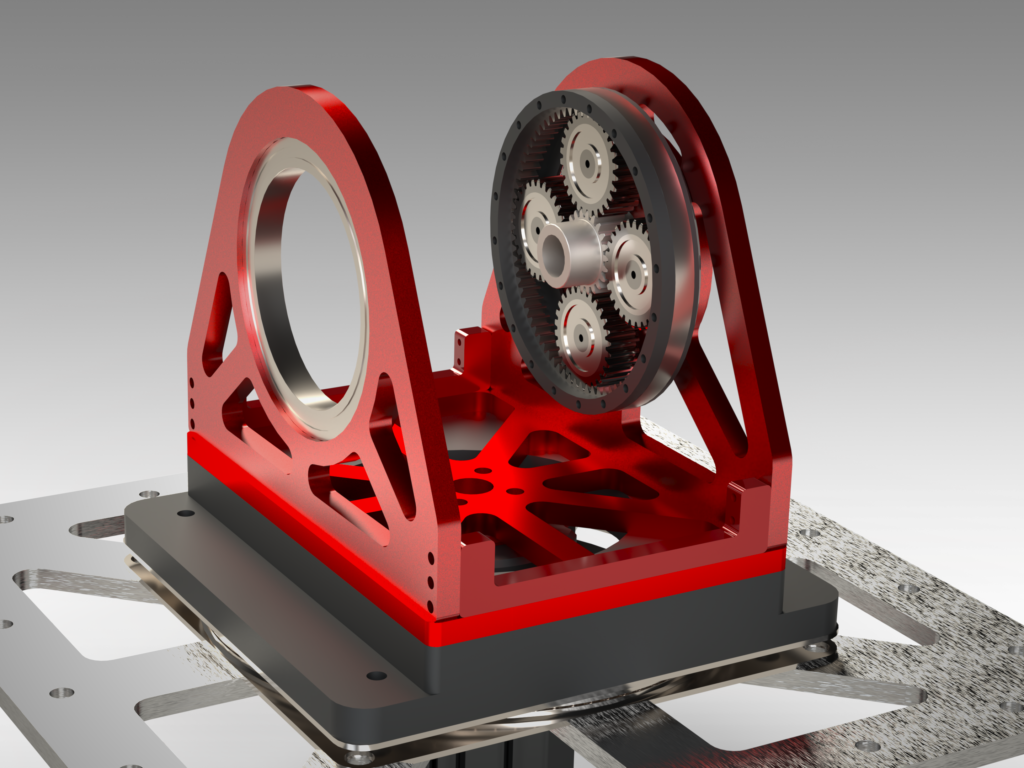
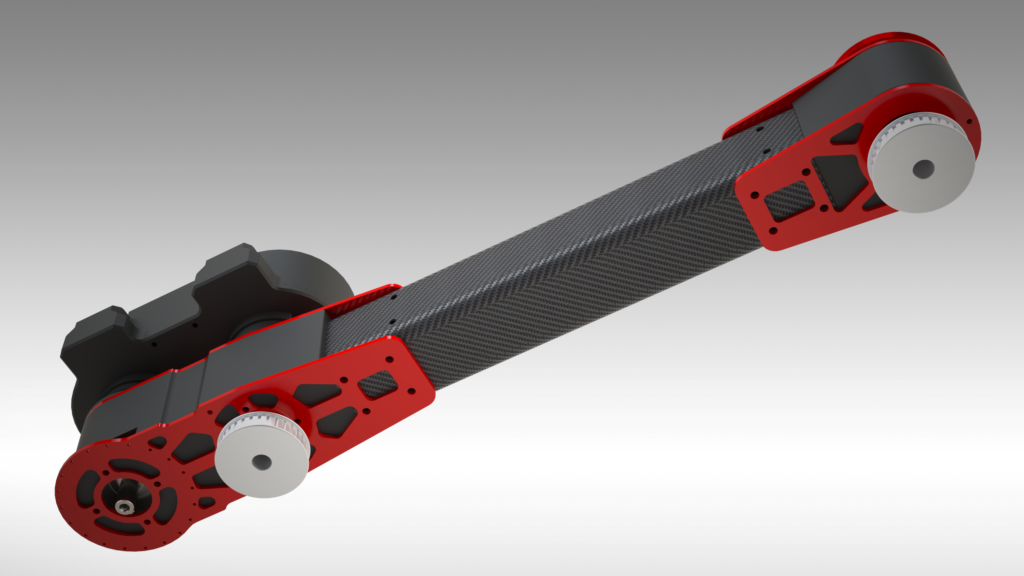
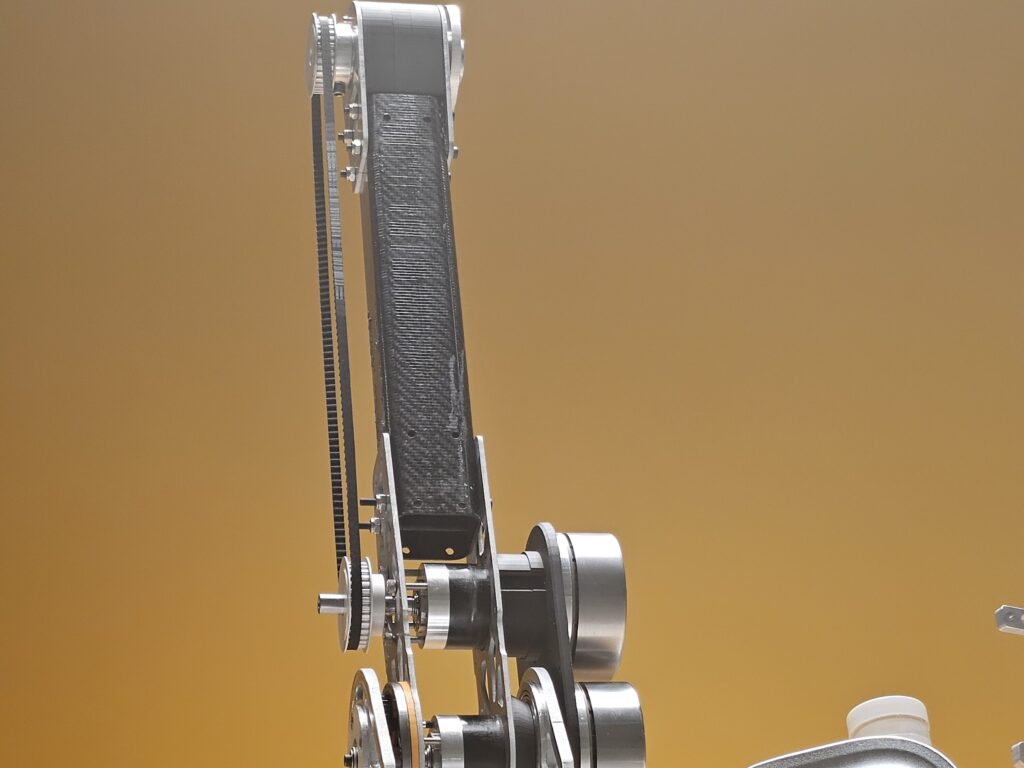
The “Bicep,” or Stage 1, has 2 degrees of freedom with both motors positioned next to each other, the shoulder motor being concentric to its joint, and the the elbow motor driving its joint via a belt drive. This configuration, again, lowers the moment arm of the elbow reducing the load on the shoulder joint. Both joints are BLDC motors with planetary gear drives attached. The should joint has a custom single stage planetary gearbox attached to it for extra reduction
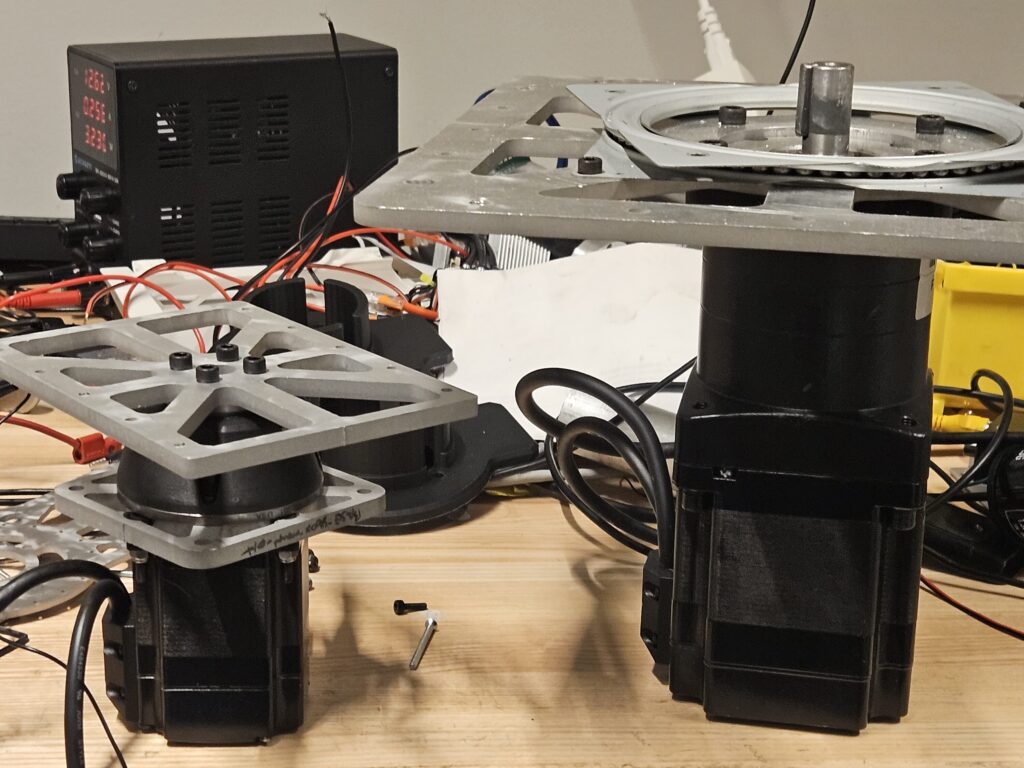
The “Base joint is driven by a Nema 23 stepper motor using a Harmonic Drive gearbox reducer. This particularly is a massive upgrade from the previous arm as that base joint was driven by a Nema 34 with a planetary gearbox. The drive has been scaled down significantly both in weight and volume while the strain wave gearbox preserves the high torque